
Gas transfer across the air–water interface and its dependence on dissolved solutes
In more than 500 experiments in sealed 3 to 4.5 L chambers, I measure how fast CO₂, O₂ and air dissolve into water while varying salinity up to 35 g/kg, sucrose up to 200 g/kg, surfactant up to 100 mg/kg, stirring in the water up to about 1,000 rpm, and five fan settings in the air. A sensor tracks the CO₂ concentration in the headspace, and a stagnant-film analysis turns its decay into a transfer velocity; across the program these span 0.5 to 20 cm/h. Because the measurement is sensitive to the room, every run starts with a stabilization dwell that holds temperature within ±0.1 °C and humidity at 95%. In fresh water, surfactant roughly halves the CO₂ transfer velocity, from 7.2 to 3.4 cm/h.
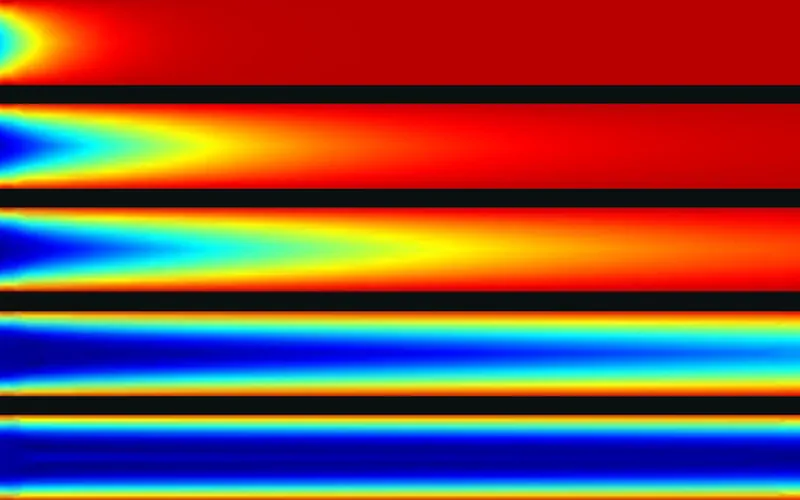
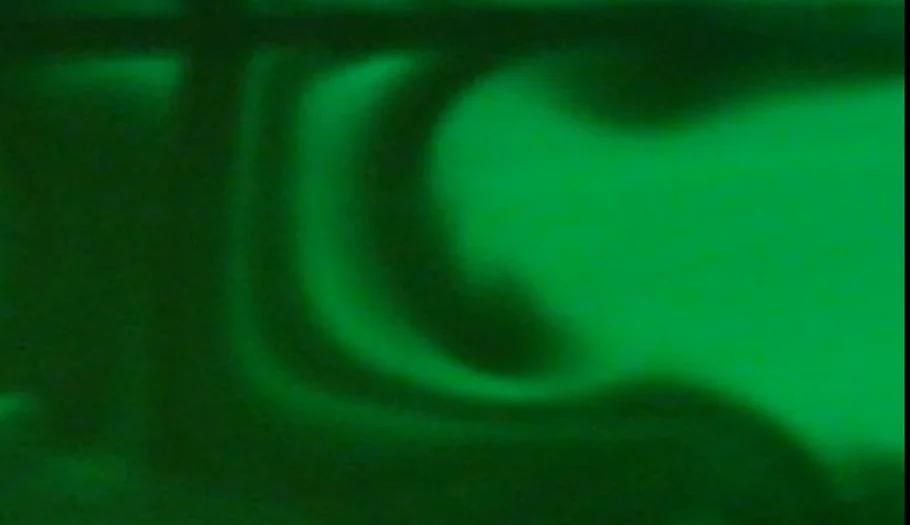
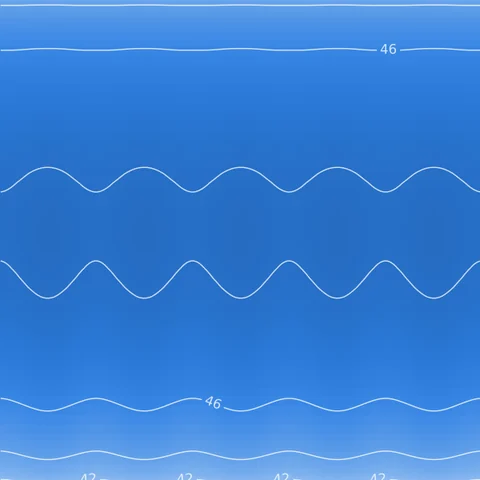
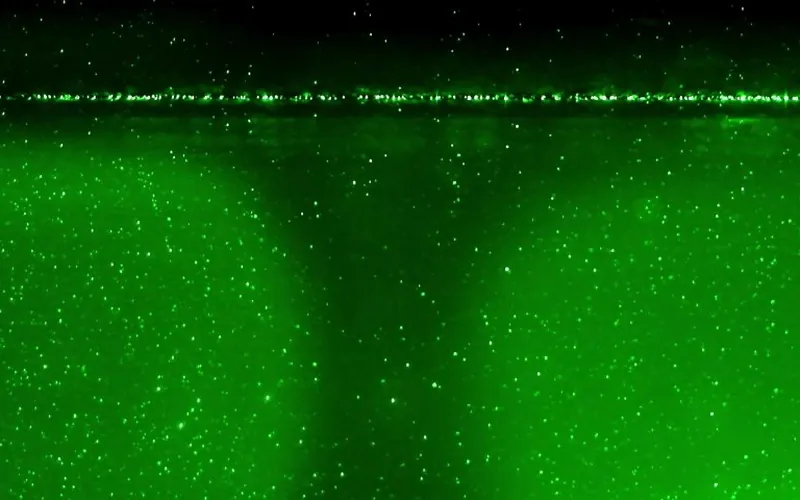
A 2-D Navier–Stokes model in MATLAB shows how dissolved CO₂, which makes the surface water heavier, turns the surface layer unstable and sinks in plumes; the Rayleigh number sets the onset.
Manuscript in preparation · APS DFD 2024 · APS March Meeting 2026 · Full write-up